Author: Ken Rea

  • Vacation-home qualification

    Vacation-home qualification

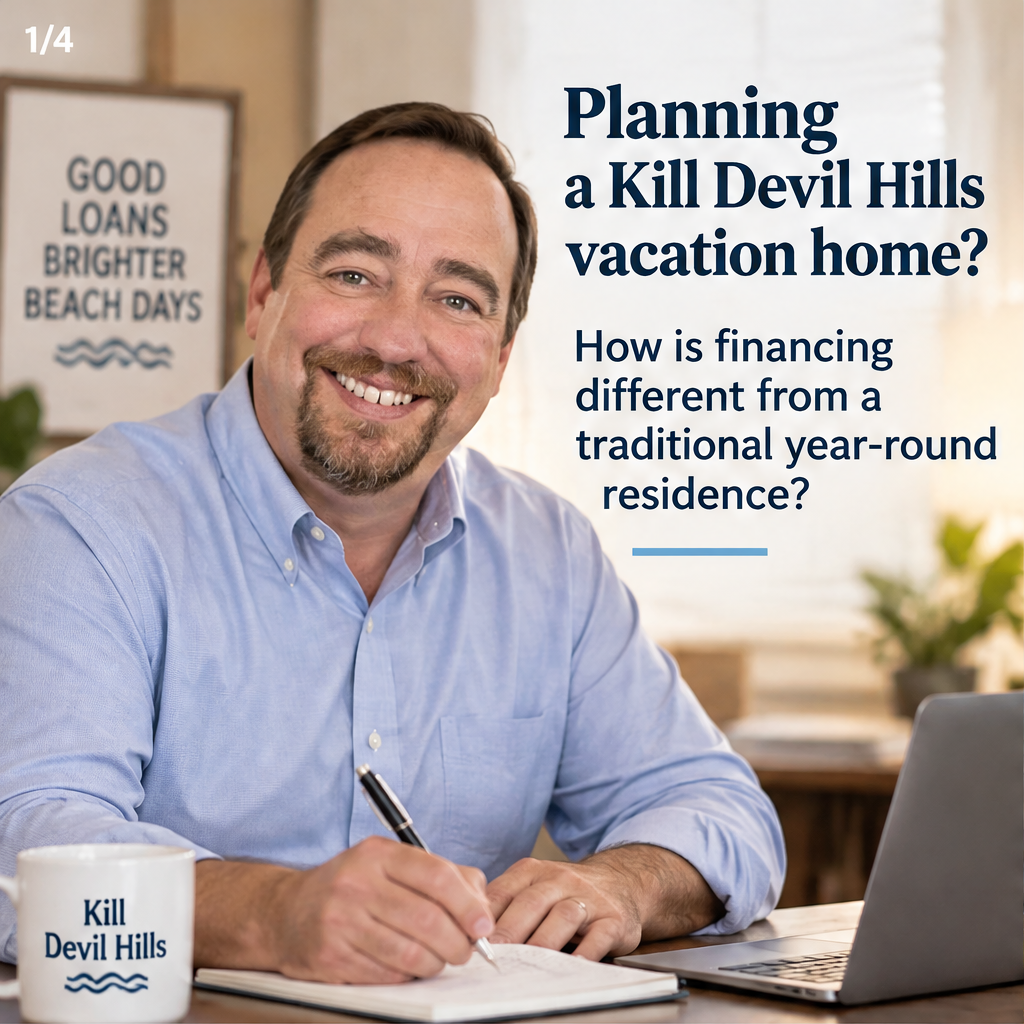
    Financing a vacation home in Kill Devil Hills can differ from financing a traditional year-round residence. A key distinction is the down payment: vacation homes generally have different down-payment requirements than primary residences.

    Lenders typically review the intended occupancy, the borrower’s finances, and the property’s use when evaluating a vacation-home purchase. Kill Devil Hills includes vacation homes, traditional homes, and multifamily housing, so confirming the lender’s classification before making an offer is an important step.

    Flood-insurance considerations also deserve attention. Five designated flood zones affect local properties, and the applicable requirements can vary based on the property’s location and classification. Review these details with your mortgage broker before moving forward.

    If you are considering a vacation home in Kill Devil Hills, compare the financing details with your plans and budget. Message me to review your options.


    Continue to full article

  • Happy Halloween

    Halloween falls on October 31 because the ancient Gaelic festival of Samhain, considered the earliest known root of Halloween, occurred on this day.
    In the eighth century, Pope Gregory III designated November 1 as a time to praise all saints.
    Soon, All Saints' Day incorporated some traditions of Samhain and the evening before was known as All Hallows Eve, and later Halloween.
    Over time, Halloween evolved into a day of activities like trick-or-treating, carving jack-o-lanterns, festive gatherings, donning costumes and eating treats.
    Today’s the day to eat candies and sweets to your heart’s content! Happy Halloween!

  • 60% Prefer Co-Buying to Waiting Alone

    Interesting shift in the homebuying landscape: a recent national survey found that 60% of Americans would rather own half a home with someone else now than wait out the rental cycle for solo ownership. It's not hard to see why—94% pointed to affordability as the main motivator, whether that's sharing monthly payments, splitting the down payment, or simply being able to get into a better home together. Family is still the most common co-buying partner (68% would buy with relatives), but it’s younger and lower-income buyers who are most likely to consider teaming up with friends.

    What stood out to me is how much thought folks are putting into these partnerships: nearly every prospective co-buyer wants a written agreement covering exit and payment terms. And as non-traditional down payment sources hit 29%, there's clearly a need for mortgage guidance that goes beyond the basics—a space I've spent three decades navigating, especially for those whose financial paths don’t follow the standard script. Co-buying is more than a financial decision: 61% see it as serious as marriage, and half believe it could help prevent loneliness later in life. The landscape is changing, and so are the ways we help people make homeownership work.

  • Save Your First-Home Down Payment Faster

    After 30 years in the mortgage world, I can tell you: saving for your first home’s down payment is much more manageable—and motivating—when you set a clear, realistic target based on actual US home prices, not just a number pulled out of the air. While the classic advice is to save around 20% for a down payment, the truth is, some loan programs allow for much less out of pocket. That’s especially helpful for folks whose income or savings path doesn’t fit the standard mold.

    Here’s what I’ve seen work: use a dedicated high-yield account for your down payment fund and automate transfers right on payday. That way, your savings grow before everyday expenses have a chance to eat into them. Take a hard look at your last three months of spending—most people are surprised by what they find. Cutting out unused subscriptions or scaling back on dining out can often free up $100–$300 per month for your future home.

    I always encourage clients to use windfalls—tax refunds, bonuses, gifts, side gigs—to accelerate their savings. If you can set aside more than half of any extra cash you come across, you’ll find yourself closing the gap to homeownership much faster.

    Stay flexible about what you need right out of the gate, and don’t forget to look into assistance programs through federal housing agencies or your lender. Checking in on your progress each month helps you stay on track, even if life throws you a curveball. Building a path to homeownership isn’t always straightforward, but with the right plan, it’s absolutely doable.

  • Buying a Home Can Hedge Against Inflation

    Over my 30 years in the mortgage business, I’ve seen how buying a home can serve as a practical hedge against inflation—especially for folks looking to anchor their financial future. With a 30-year fixed-rate mortgage, your principal and interest payments stay steady, even as rents climb and borrowing costs remain in the mid-7% to high-7% range. Locking in those monthly payments can really help protect your purchasing power over time, and you can benefit from property appreciation along the way.

    For buyers planning to stay put for 7–10 years—and who have six months of savings, a stable income, and enough cash for a solid down payment—this approach can make a lot of sense. Don’t forget to budget for 2%–6% in closing costs when you buy, and another 1%–3% if you sell down the line. It often takes time for home equity to grow enough to cover those expenses, so patience is key.

    The Fed’s outlook sees inflation easing in 2027, but mortgage rates are expected to stay elevated, which means some buyers might consider alternative ways to shield themselves from inflation. But for those who want stability and the chance to build equity, homeownership—with the right loan structure—continues to be a solid strategy. I’ve helped many borrowers, especially those who don’t fit the standard mold, navigate these decisions and land a mortgage that really works for their unique situation.

  • Buying A Home? A New Credit Score Could Lower Your Rate

    Buying A Home? A New Credit Score Could Lower Your Rate

    When it comes to securing a mortgage, your credit score can make a real difference in the rate you’re offered. The Federal Housing Finance Agency now allows approved lenders to use either VantageScore 4.0 or Classic FICO for mortgages. For borrowers with limited credit history, VantageScore 4.0 might open new doors—though it’s important to know that not every lender is on board yet, and if your loan goes through manual underwriting, Classic FICO is still required.

    After 30 years of guiding folks through the mortgage maze, I’ve seen how the right credit profile can impact your options, especially if your income or background doesn’t fit the usual boxes. If you’re self-employed or your finances are a little outside the norm, understanding which score a lender uses can help you prepare and put your best foot forward. Getting the details right from the start is how I help clients cross the finish line, no matter how complicated the route.

    Continue to full article

  • How to Buy a Home That Has a Tax Lien

    How to Buy a Home That Has a Tax Lien

    In my 30 years guiding borrowers through every twist and turn of home financing, I’ve seen tax liens show up more often than you’d expect. A tax lien—whether from unpaid property or federal taxes—can make a home purchase more complex, but it doesn’t always slam the door shut. The key is thorough, timely title work. This uncovers any liens early, clarifies what needs resolving, and lays out the seller’s equity position so everyone knows how those liens can be handled at closing. For buyers—especially those with non-standard income or unique financial backgrounds—understanding these steps is essential to keeping the process on track. The right approach can turn a potential deal-breaker into just another hurdle we clear together.

    Continue to full article

  • How Can Homebuyers Beat the Headline Mortgage Rate?

    How Can Homebuyers Beat the Headline Mortgage Rate?

    When it comes to mortgage rates, the headline number rarely tells the whole story. In my experience working with borrowers from all walks of life—especially those whose income doesn’t fit the standard mold—I’ve seen mortgage rates vary by as much as 93 basis points. That kind of swing can mean a difference of around $28,400 in buying power. For most folks, strong credit (think 700-720+), a solid down payment, and carefully choosing the right lender make a real impact. Comparing options from several lenders isn’t just smart—it’s how you find the rate that actually fits your life, not just your paperwork. After 30 years and thousands of loans, I’ve learned there’s always a way to structure a deal that works for you, even when things seem complicated.

    Continue to full article

  • New Homes Offer Better Value Nationwide

    Lately, I've been watching new construction gain real traction across the country—builders are sharpening their pencils, cutting prices, and offering incentives that you just don't see with most resale homes. With so many homeowners holding onto their current mortgages, the pool of existing homes for sale stays tight, putting new builds front and center for anyone weighing options on price and flexibility.

    In areas where building is booming, it's clear that more homes on the market actually help with affordability—competition among builders means more choices, and often, better deals for buyers. I've seen buyers benefit from price reductions and perks like mortgage rate buydowns, which can make a serious difference when you're running the numbers on a new loan.

    Of course, these affordability gains aren't guaranteed to last, especially if building permits slow down. For folks comparing new and resale homes, it's worth taking a close look at what builders are offering right now. After working with countless buyers—including plenty of self-employed borrowers who need a creative approach—I've learned that the right opportunity often comes down to timing and knowing where to look.

  • Homeownership Costs Go Beyond the Price Tag

    When folks think about buying a home, the first question is usually, “What’s the price?” But after 30 years in mortgages, I can tell you it’s the annual cost of owning that shapes your real budget. Recent research breaks this down: economists estimate the average annual user cost hovers around 5% of a home’s value nationwide. But, just like every borrower’s story is different, local numbers swing widely—from nearly 7% in some markets to about 2% in others. Picture this: two homes, each listed at $500K. One could cost you $35K a year to own, while the other just $10K—a huge difference, especially if you’re comparing renting versus buying. Rules changed after the 2018 tax law, too: with more people taking the standard deduction, the old tax benefits tied to homeownership aren’t what they once were. The takeaway? When you’re weighing your options, look past sticker price. Compare what it’ll actually cost to own each year against local rent. That’s the kind of practical approach I bring to every mortgage conversation—especially for those with unique income stories.